

Tines
Security
AI transcription, case management, and document automation for India's courts
6.0MB · 14,153px tall · uses Times, Overused Grotesk Variable, Overused Grotesk Medium
Industry
AI Agents, Productivity
Style
Dark Mode, Illustrative, Typographic
Stage
Private
Built with
Framer
About the site
Adalat AI is a nonprofit building an end-to-end justice tech stack for Indian courts, starting with real-time transcription of proceedings and extending to case flow management, OCR, and judicial research. The homepage mixes a documentary photo of a real court office, TIME100 AI recognition, an isometric illustration of a courtroom buried in files, and hard numbers on the backlog (52M+ pending cases) before impact stats, judges' quotes, and a global map. A strong reference for mission-led organizations that need to make a systemic problem feel urgent.
For courts, governments and funders: make the backlog feel urgent with hard numbers, then show AI already cutting delays in thousands of courtrooms.
Primary navigation
ClickTap a section to see it on the page
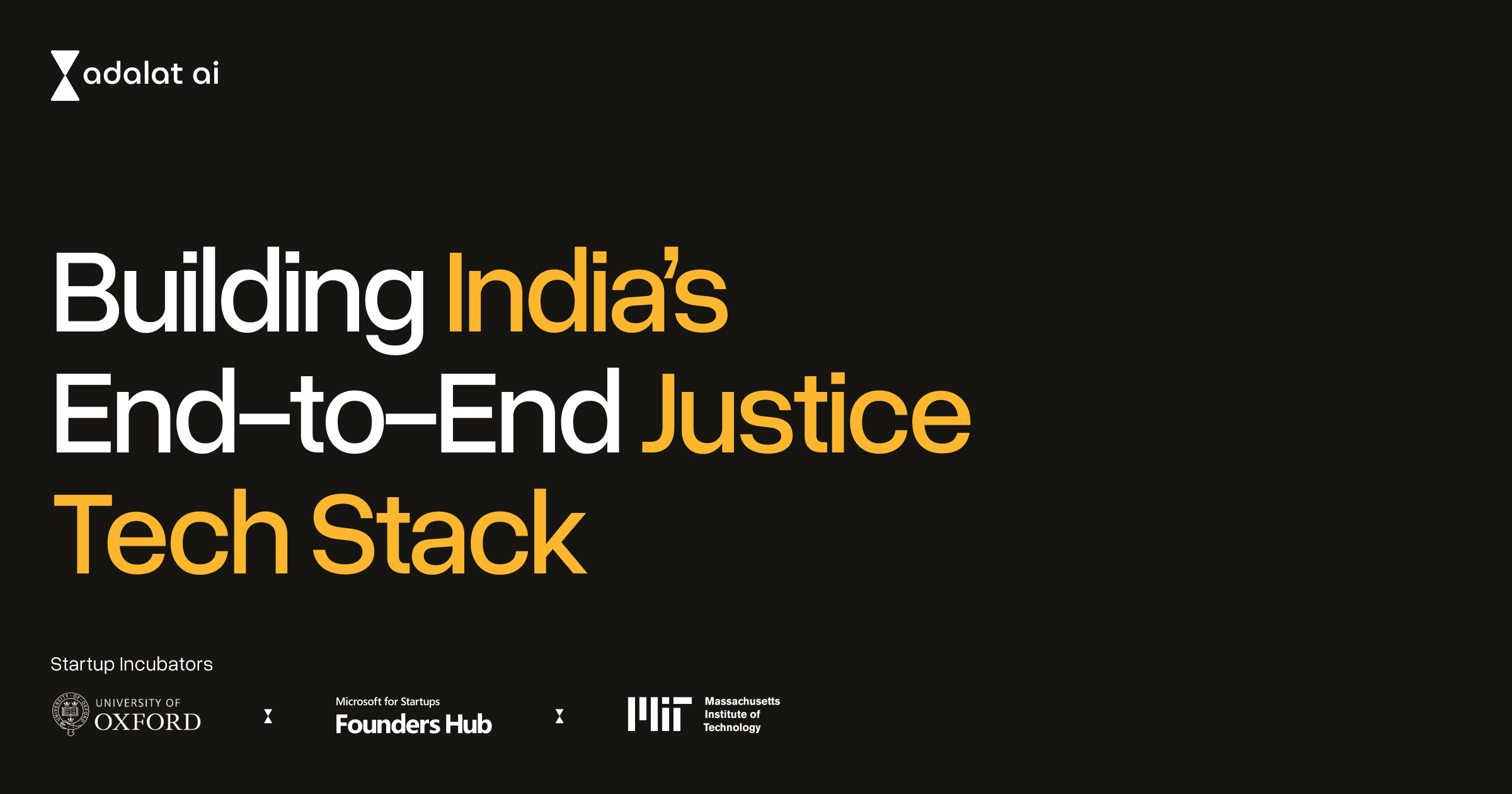
'Building India's End-to-End Justice Tech Stack' over a documentary photo of a crowded court office, with a yellow Get Involved button, Learn more, and incubator logos from Oxford, Microsoft for Startups and MIT.
Why it converts: A real, cluttered court office makes the problem visible before a word is read, and elite incubators lend a young nonprofit instant credibility.
A carousel of news cards led by TIME100 AI covers and 'Utkarsh Saxena named to TIME's 100 Most Influential People in AI 2026'.
Why it converts: Global press recognition tells governments and donors this is a proven, trusted team, which matters when the buyer is a court system.
'Courtrooms are drowning in inefficiencies— manual processes, slow or missing stenographers, stacks of paperwork', above an isometric illustration of a dark courtroom buried under paper files.
Why it converts: The illustration shows the chaos judges live with every day, so the solution that follows reads as relief rather than new technology to learn.
'The process has become the punishment' above four stats on black: 52M+ cases pending, 66% of prisoners jailed without conviction, a 12.7-year average case age at the Supreme Court and 283+ years to clear the backlog.
Why it converts: Numbers this large turn an abstract policy issue into a human emergency, giving officials and funders an urgent reason to act.
A carousel of problem cards with hand-drawn illustrations (Lack of Stenographers, Manual Document Processing, Language Barriers, Inefficient Case Management), each linking to 'Check the solution'.
Why it converts: Each card names one pain a court administrator already knows and links straight to the fix, turning the problem list into a product tour.
A rising step chart of impact: 11 partner states, 6,000+ judges reached, 20–25% courtroom coverage nationwide, 2–3x judicial output and 30–50% shorter case timelines.
Why it converts: Presenting the numbers as climbing steps makes growth feel inevitable, and output and timeline gains are the exact results a court system is measured on.
Two quotes from a judicial magistrate and a district judge, including 'Before Adalat AI, I could hear only two to three witnesses a day. Now… I can handle five to six'.
Why it converts: Judges describing their own caseloads is the proof a court administrator trusts most, because it comes from the people who use the product daily.
A world map pinning Africa, South Asia and South-East Asia, noting that 'Ghana, Kenya, and Zambia are exploring Adalat AI's solutions' for court systems inherited from British rule.
Why it converts: Framing India as the first of many countries tells funders their support scales globally, and tells Indian courts they are adopting a model others will follow.
A scrolling row of partners including The/Nudge Institute, HT Parekh Foundation, Meta and Microsoft.
Why it converts: Backing from major philanthropies and tech companies signals financial stability, a key concern when courts adopt a nonprofit's tools.
Three illustrated cards (Donate, Partner with us, Careers), followed by a 'Get in touch' contact form and a support email.
Why it converts: Three ways to help let donors, partners and job seekers each find their action, which suits a nonprofit that relies on all three.


